🌍 Impact of the Iran–Israel Conflict on Indian Agriculture
⚔️ Background and Causes of the Iran–Israel War
The ongoing dispute between Iran and Israel has emerged as a significant geopolitical crisis with far-reaching impacts beyond the Middle East. The conflict intensified due to military strikes, regional dominance issues, and proxy disputes. A major turning point was the disruption of the Strait of Hormuz, a crucial global trade route through which a large share of the world’s oil, gas, and fertilizers passes.
This disruption has triggered a global supply shock affecting energy markets, agricultural inputs, and ultimately food systems worldwide, including India.
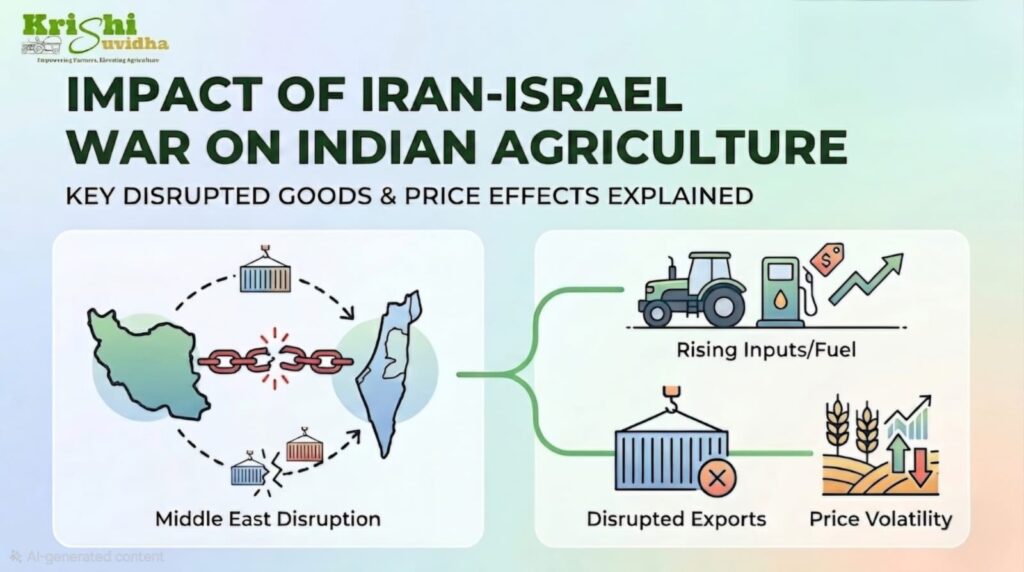
⛽ Rising Oil Prices and Agricultural Cost Burden
One of the most immediate impacts of the conflict has been on global energy markets. Oil prices surged beyond $100 per barrel due to supply disruptions and geopolitical uncertainty.
Indian agriculture heavily depends on diesel and petrol for irrigation, machinery, and transportation. As fuel prices rise, farmers face increased costs for operating tube wells, tractors, and harvesting equipment.
This rise in production costs reduces profit margins and discourages farmers from investing in high-input farming practices.
🌱 Fertilizer Shortage and Crop Productivity Decline
The energy crisis has also caused shortages of LPG and natural gas, which are essential for fertilizer production, especially nitrogenous fertilizers like urea. Since fertilizer production is energy-intensive, rising fuel costs have significantly increased fertilizer prices globally.
Additionally, disruptions in the Strait of Hormuz have complicated global urea trade, leading to shortages and delays in supply. Farmers dependent on urea and DAP are facing higher costs and increased reliance on government subsidies.
Reduced fertilizer application can directly lower crop yields, particularly in staple crops like wheat and maize. This threatens agricultural productivity and food security in India.
🚢 Global Trade Disruptions and Import–Export Challenges
The conflict has also disrupted global trade through increased shipping costs, delays, and higher insurance premiums. India, being a major importer of oil and fertilizers, is particularly vulnerable.
At the same time, agricultural exports such as spices have been affected due to unstable geopolitical conditions, resulting in economic losses.
📉 Impact on Farmers and Food Security
The combined effects of rising fuel costs, fertilizer shortages, and supply chain disruptions have created a dual burden on Indian agriculture. Farmers are facing higher input costs and uncertain returns.
Small and marginal farmers are the most affected due to limited financial resilience. This situation may push farmers toward low-input crops and reduced input usage, potentially impacting overall agricultural output.
🔮 Way Forward for Indian Agriculture
The Iran–Israel conflict highlights the vulnerability of Indian agriculture to global shocks. To reduce risks, India must:
- ✔ Diversify import sources for energy and fertilizers
- ✔ Promote sustainable and low-input farming practices
- ✔ Strengthen domestic fertilizer production
- ✔ Enhance agricultural resilience through policy support
Ensuring long-term food security requires strategic planning and reduced dependence on global uncertainties.