
General Information
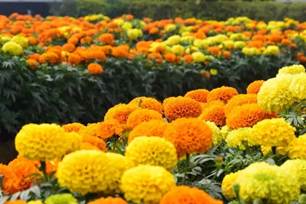
Marigolds are a popular, short-duration flower crop grown widely for its bright yellow, orange, and red flowers. Marigold flowers are in high demand for religious ceremonies, festivals, garlands, and decorations, providing good income to farmers. Besides economic benefits, marigolds help with natural pest control, support pollinators, and their petals are used to extract lutein for food, feed, and cosmetics. This makes marigolds a profitable and environmentally beneficial crop for farmers.
Climate
| Temperature | Rainfall | Sowing Temperature | Harvesting Temperature |
| 18 – 20 ºC | 600- 800 mm | 18– 20 ºC | 25 – 30ºC |
Marigold thrives best in a mild climate, which promotes vigorous growth and abundant flowering. The optimal temperature for healthy development is around 18–20°C. When temperatures exceed 35°C, plant growth slows, resulting in smaller and fewer flowers. In harsh winter conditions, frost can damage both the plants and flowers, reducing yield and quality.
Soil
Marigold is adaptable and can be grown in a variety of soils. French (dwarf) marigolds perform best in light soils, while African (tall) marigolds thrive in rich, well-drained, and moist soils. Ideally, marigold cultivation is suited to sandy loam soils with a pH of 7.0–7.5, which provide good aeration and drainage for healthy plant growth.
Varieties
Pusa Narangi
Pusa Narangi is a tall African marigold variety with bright orange flowers and a long flowering duration. The plants grow vigorously and are suitable for commercial cultivation and cut-flower production. It produces approximately 25–30 tonnes of flowers per hectare under recommended practices. This variety is ideal for garlands, floral decorations, and industrial uses.
Pusa Basanti
Pusa Basanti is a tall African marigold with yellow-orange flowers, especially suited for the Rabi season. It is widely used in garland making and flower markets. Plants are robust with long stems, which make flower harvesting easier. The average production ranges from 20–25 tonnes per hectare, depending on management practices.
Hindustani
Hindustani is another tall African marigold variety known for large orange flowers and strong, erect plants. It is extensively grown for commercial flower markets due to its high market appeal and longer flowering span. The average flower yield is around 22–28 tonnes per hectare, making it a profitable variety for farmers.
Pusa Moti
Pusa Moti is a compact French marigold variety with bright yellow flowers. Its small stature makes it ideal for flower beds, borders, and garden landscaping. The plants are hardy, bloom profusely, and maintain continuous flowering for a long duration. The average flower yield is around 8–10 tonnes per hectare, depending on proper care and management.
Pusa Bahar
Pusa Bahar is a small dwarf French marigold with orange-yellow flowers, particularly suited for pot cultivation and decorative purposes. Its dense flowering habit enhances the aesthetic appeal of gardens and patios. Under recommended practices, it produces an average yield of 7–9 tonnes per hectare, making it popular among ornamental growers.
Batawari
Batawari is a dwarf French marigold known for its dense flowering habit and uniform growth. It is widely grown for ornamental use, including beds, borders, and container gardening. The variety produces around 8–10 tonnes of flowers per hectare, offering consistent bloom and marketable yield for decorative purposes.
Hybrid varieties
Atlantis Mixed F1 Early-blooming variety with double orange and yellow flowers, yielding 18 tonnes per hectare. Ideal for beds, borders, and decorative purposes.
Crackerjack 1
Flowers in gold, orange, and yellow shades, compact growth, yield 18 tonnes per hectare. Suitable for ornamental gardening and cut-flower production.
Discovery Mixed F1
Dwarf, compact plants with orange and yellow flowers, yield 18 tonnes per hectare. Perfect for pots, beds, and decorative displays.
Galore Mixed F1
Flowers in gold, orange, and yellow shades, yield 18 tonnes per hectare, suitable for borders, landscaping, and decorative gardening.
Gold Coin Mixed F1
Features double flowers in gold, orange, and yellow, yielding 18 tonnes per hectare. Excellent for cut flowers and ornamental uses.
Jubilee Mixed F1
Gold, orange, and yellow flowers, yield 18 tonnes per hectare. Ideal for bedding, borders, and garden decoration.
Orange Galore F1
Vivid orange flowers, yield 18 tonnes per hectare. Perfect for bedding, pot cultivation, and decorative displays.
Papaya Crush
Large golden blooms with deep green foliage, yield 18 tonnes per hectare. Suitable for landscaping and ornamental gardening.
Vanilla F1
Creamy-white flowers, unique in color, yield 18 tonnes per hectare. Perfect for pots, borders, and decorative use.
Pusa Basanti
Medium-height with sulphur-yellow flowers, yield 20–25 tonnes per hectare. Ideal for gardens, garlands, and commercial markets.
Other varieties
Disco Mix
Disco Mix produces large, brilliant-coloured flowers that are highly floriferous, meaning the plants bloom continuously throughout the season. Its vibrant and uniform flowers make it ideal for bedding, mass plantings, and landscape decoration. The variety has an average yield of 18 tonnes per hectare, making it both ornamental and profitable for flower cultivation.
Hero Mix
Hero Mix features large double-crested blooms in seven unique colours, often highlighted with attractive gold flecks. The plants are vigorous and bloom profusely, providing a striking visual impact in gardens, beds, and decorative displays. It yields around 18 tonnes per hectare of flowers, combining aesthetic appeal with good productivity.
Red Brocade
Red Brocade is known for its bright mahogany red flowers, which are uniform, free-flowering, and highly decorative. Its rich colour adds dramatic contrast in flower beds, borders, and landscaping projects. The variety produces approximately 18 tonnes per hectare, offering both beauty and marketable yield.
Safari Mix
Safari Mix bears huge, wide, double anemone-type blooms, making it an eye-catching choice for ornamental gardening and landscaping. Its large flowers cover the plant densely, ensuring a continuous display of colour. The average flower yield is 18 tonnes per hectare, making it ideal for both decorative purposes and commercial cultivation.
Field Preparation
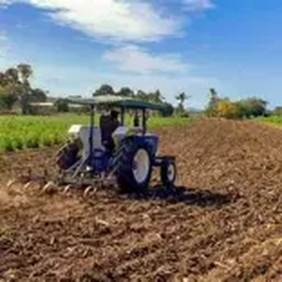
For marigold cultivation, the field should be well-drained and cleared of weeds. Plow the soil 2–3 times to make it soft and friable, mix in well-decomposed farmyard manure, and form raised beds or ridges for better drainage and healthy root growth.
Nursery Preparation
For raising marigold seedlings, nursery beds are prepared by digging to a depth of about 30 cm. The beds are thoroughly cleaned, leveled, and enriched with well-decomposed farmyard manure (FYM). To prevent ant infestation, BHC powder is lightly dusted on the beds. About 3 kg of seeds is sufficient to plant one hectare. The seeds are sown thinly, covered with a light layer of soil, and gently watered using a fine rose-water can to avoid displacing them, ensuring uniform germination and healthy seedling growth.
Sowing
Time of Sowing
Marigold can be sown in different seasons: summer (Feb sowing, Mar transplanting, Apr–Jul flowering), rainy (May sowing, Jun transplanting)winter (Aug sowing, Sep transplanting,), and spring (Dec sowing).
Spacing
The ideal spacing for marigold depends on the type and variety. For African marigolds (tall type), a standard spacing of 45 × 45 cm is recommended, though closer spacing of 30 × 30 cm can result in maximum flower yield. For French marigolds (dwarf type), a spacing of 25 × 25 cm is suitable, which can be adjusted according to the growth habit of the selected variety to ensure healthy plant development and optimal flowering.
Sowing Depth
The ideal depth of sowing for marigold seeds is shallow, usually around 0.5–1 cm.
Method of Sowing
Direct Sowing
Direct sowing of marigold involves sowing seeds thinly on a well-prepared and fertile field, lightly covering them with soil, and providing gentle irrigation. Germination occurs in about 7–10 days, after which seedlings are thinned to ensure healthy plant growth and optimal flowering.
Transplanting
Once the seedlings develop 4–5 true leaves or about a month old, they are carefully uprooted from the nursery for transplanting. Transplanting is ideally done in the evening or during cooler parts of the day to reduce stress and avoid heat damage. Seedlings are gently placed in the prepared field, and light irrigation is applied immediately to help them establish quickly and encourage root development.

Seed rate
When raising seedlings in a nursery for transplanting, about 3 kg of seeds per hectare is sufficient to produce healthy seedlings. In the case of direct sowing, the seed rate varies with the variety: African (tall) marigolds require 3–4 kg per hectare, while French (dwarf) marigolds need 2–3 kg per hectare.
Seed Treatment
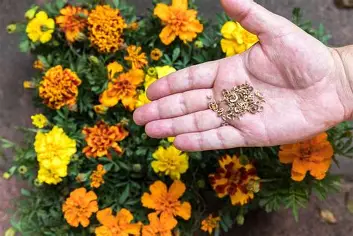
Marigold seeds are treated before sowing by soaking them in a fungicide solution or dusting with BHC powder to protect against diseases and pests. This ensures better germination, healthy seedlings, and strong plant growth.
Manure
Farm Yard Manure
For marigold cultivation, 20–25 tonnes of well-decomposed farmyard manure (FYM) per hectare is applied to the field 15 days before sowing. FYM improves soil fertility, enhances moisture retention, and promotes healthy plant growth and flowering.
Fertilizer
Nutrient Requirement (kg per hectare)
| NITROGEN | PHOSPHORUS | POTASH |
| 90 | 90 | 75 |
Fertilizer Requirement (kg per hectare)
| UREA | SSP | MOP |
| 196kg | 563 kg | 125 kg |
Note:
Out of the total fertilizer requirement, 45 kg of nitrogen along with the full dose of phosphorus and potassium is applied as a basal dose at the time of transplanting. The remaining quantity of nitrogen is given as a top dressing about 45 days after transplanting.
Nutrient Deficiency
Iron Deficiency
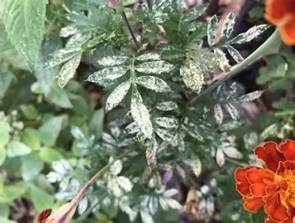
In marigolds, iron deficiency is quite common in alkaline soils of UP. The young leaves turn yellow between the veins, while the veins remain green, and in severe cases the leaves may even turn pale or whitish. This results in weak growth and poor flower quality.
Management:
Maintain soil pH near 6.0–6.5 and avoid excess alkalinity. For quick relief, spray 0.5% ferrous sulphate or chelated iron (Fe-EDDHA/Fe-DTPA) on the crop. If the problem repeats, apply 5–10 kg ferrous sulphate per acre along with organic manure in the soil.
Magnesium (Mg) Deficiency
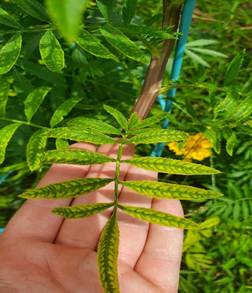
Magnesium deficiency is noticed more in sandy or light soils of UP. Older leaves show yellowing between the veins, and sometimes a reddish or purple tinge appears. Prolonged deficiency leads to smaller flowers and stunted growth.
Management:
Spray 2% magnesium sulphate (MgSO₄) solution on the crop for immediate correction. During field preparation, mix 10–15 kg MgSO₄ per acre in the soil, and avoid excessive use of potash fertilizers as they reduce magnesium uptake.
Weed Control
Hand weeding at 20–25 and 40–45 days, along with intercultural operations and earthing-up, keeps the field clean. Mulching with straw or polythene also suppresses weeds. For chemical control, Pendimethalin (1 kg a.i./ha) as pre-emergence spray is effective.
Intercultural Operation
Pinching
Pinching refers to the removal of apical buds. In tall African marigold varieties, the plants usually grow tall before producing side branches. By removing the apical buds at the early stage, more lateral shoots develop, giving rise to a compact, bushy plant with a higher number of uniform flowers. Sometimes, due to late transplanting, flower buds may form too early; in such cases, the initial buds are removed to encourage proper vegetative growth. Pinching is generally advised in both African and French marigolds around 40 days after transplanting.

Staking
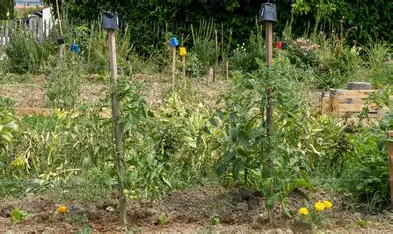
Staking involves giving support to tall marigold plants. African marigolds, being taller, are supported with bamboo sticks to prevent lodging or bending of stems, ensuring proper growth and better flower display.
Irrigation
During the vegetative stage of marigold, continuous water supply is essential, as shortage of moisture slows plant growth and reduces flowering. The irrigation schedule varies with soil and season—during winter, watering is required once every 8–10 days, while in summer it should be more frequent, at intervals of 4–5 days.
Plant Protection
Major Insects and pest and their management
| Pest | Symptoms | Peak Stage of Infestation | Management |
| Aphids | Colonies of small green/black insects on tender shoots and buds, sucking sap → leaves curl and growth stunted. | Early growth and flowering stage | Spray Imidacloprid @ 0.3 ml/l or Neem oil @ 20 ml/l, encourage ladybird beetles. |
| Thrips | Silvery streaks on leaves, curling and distortion, flower buds fail to open properly. | Vegetative and flower bud stage | Spray Spinosad @ 0.3 ml/l or Fipronil @ 1 ml/l, maintain field sanitation. |
| Red Mite | Yellow mottling on leaves, fine webbing on undersurface, severe cases cause drying. | Hot and dry periods | Spray Dicofol @ 2 ml/l or Wettable sulphur @ 2 g/l, ensure proper irrigation. |
| Leaf Miner | White serpentine mines on leaves, reduced photosynthesis, leaf drying. | Vegetative stage | Spray Abamectin @ 0.5 ml/l or Neem oil @ 30 ml/l, remove infested leaves. |
| Hairy Caterpillar | Larvae feed heavily on foliage, leaving only veins, severe defoliation. | Early vegetative stage | Collect and destroy larvae, spray Quinalphos @ 2 ml/l or Chlorpyriphos @ 2.5 ml/l. |
| Bud Borer | Caterpillars bore into buds and flowers, causing dropping and poor-quality blooms. | Flowering stage | Handpick larvae, spray Emamectin benzoate @ 0.4 g/l or Neem oil @ 30 ml/l. |
Aphids
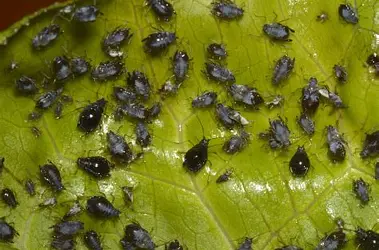
Aphids appear as colonies of small green or black insects that suck sap from tender shoots and buds, causing curling of leaves and stunted plant growth. Heavy infestation leads to yellowing, drying of leaves, and reduced flower size. They also secrete honeydew which encourages sooty mould growth on plants.
Management:
They can be controlled by spraying Imidacloprid @ 0.3 ml/litre of water or Neem oil @ 20 ml/litre. Natural enemies like ladybird beetles should also be encouraged for biological control.
Thrips
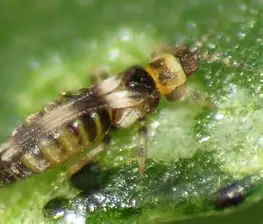
Thrips damage marigold by producing silvery streaks on leaves, which later curl and distort. Flower buds often fail to open properly under heavy attack. Severe infestation leads to shriveling of petals and poor-quality flowers, while leaves may appear brittle and crinkled.
Management:
Control can be achieved by spraying Spinosad @ 0.3 ml/litre or Fipronil @ 1 ml/litre of water. Good field sanitation also helps in reducing thrips infestation.
Red Mite
Red mites cause yellow mottling on leaves and produce fine webbing on the undersurface. Severe infestation may lead to drying of the leaves. Infested leaves often become bronze in colour and plants show poor vigour, which ultimately reduces flower yield.
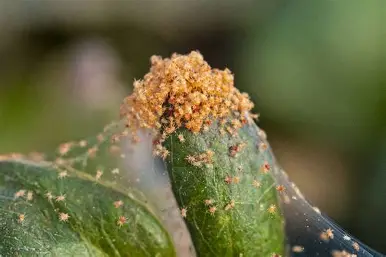
Management:
Spray Dicofol @ 2 ml/litre of water or Wettable sulphur @ 2 g/litre. Maintaining proper irrigation reduces the chance of mite outbreaks.
Leaf Miner
Leaf miners create white serpentine mines on leaves, which reduces photosynthesis and causes leaf drying. In severe cases, leaves may drop prematurely, reducing plant vigour. The mined areas also serve as entry points for secondary infections.
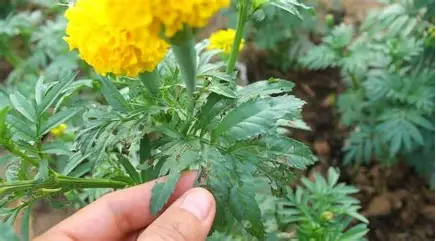
Management:
Spray Abamectin @ 0.5 ml/litre of water or apply Neem oil @ 30 ml/litre. Infested leaves should be collected and destroyed to stop further spread.
Hairy Caterpillar
Hairy caterpillars feed heavily on foliage, leaving only veins behind, and in severe cases can completely defoliate the plants. The larvae are gregarious in early stages and can destroy large patches of crop overnight. Defoliated plants show poor growth and fail to produce flowers.
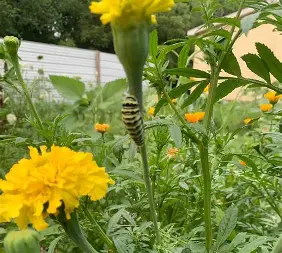
Management:
The larvae can be hand-picked and destroyed. Chemical control includes spraying Quinalphos @ 2 ml/litre of water or Chlorpyriphos @ 2.5 ml/litre.
Major diseases and their management
| Disease | Symptoms | Peak Stage of Infestation | Management |
| Alternaria Leaf Spot | Circular brown to dark brown spots with concentric rings on older leaves. Spots enlarge, merge, and cause blighting. Severe infection leads to premature leaf drop and yield loss. | Mostly during vegetative and flowering stage, when foliage is dense. | Spray Mancozeb @ 2.5 g/litre or Chlorothalonil @ 2 g/litre at 10–15 day intervals. Remove and destroy infected leaves. |
| Powdery Mildew | White, powdery fungal growth appears on leaves, stems, and buds. Affected leaves turn yellow, curl, and dry. Severe attack reduces bloom size and delays flowering. | More common during flowering stage, affecting buds and flowers. | Spray Wettable sulphur @ 2.5 g/litre or Carbendazim @ 1 g/litre. Maintain spacing and good air circulation. |
| Botrytis Blight (Grey Mould) | Grey mould develops on flowers, buds, and shoots. Infected flowers rot, buds fail to open, and disease is worse in cool, humid weather. | Severe during flowering and post-flowering stage. | Spray Captan @ 2 g/litre or Carbendazim + Mancozeb @ 2 g/litre. Remove affected flowers and avoid excess humidity. |
| Collar Rot / Root Rot | Yellowing and wilting of lower leaves, rotting at collar near soil, with white mycelium and mustard-like sclerotia. Plants collapse in severe cases. | Appears mostly in early vegetative stage after transplanting. | Drench soil with Carbendazim @ 2 g/litre. Seed/seedling treatment with Trichoderma viride @ 4 g/kg seed helps prevent it. |
| Damping Off | Seedlings rot at the base, fall over, and die. Disease spreads quickly in humid, poorly drained nursery beds. | Affects mainly the seedling stage in nursery. | Drench nursery with Captan or Thiram @ 2 g/litre. Raise nursery beds, use well-drained soil, and avoid overwatering. |
Alternaria Leaf Spot
This disease causes circular brown to dark brown spots with concentric rings on older leaves. The spots gradually enlarge and merge, leading to blighting of foliage. In severe cases, premature leaf drop occurs, which reduces photosynthesis and lowers flower yield.
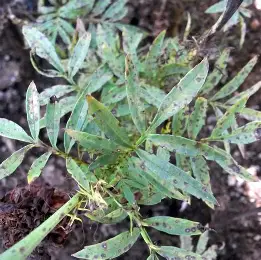
Management
Alternaria leaf spot can be managed by spraying Mancozeb @ 2.5 g/litre of water or Chlorothalonil @ 2 g/litre at intervals of 10–15 days. Removal and destruction of infected leaves also help reduce the spread of the disease.
Powdery Mildew
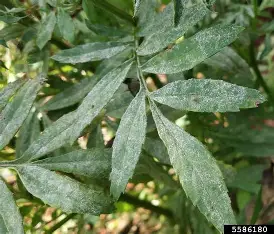
White, powdery fungal growth develops on the surface of leaves, stems, and flower buds. Affected leaves slowly turn yellow, curl, and dry out. Under severe infection, flower size is reduced, and flowering gets delayed.
Management
Spraying Wettable sulphur @ 2.5 g/litre of water or Carbendazim @ 1 g/litre is effective in controlling the disease. Maintaining proper plant spacing and good air circulation in the field also reduces disease incidence.
Botrytis Blight (Grey Mould)
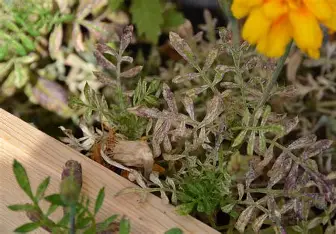
Greyish fungal growth appears on flowers, buds, and young shoots. Infected flowers rot, buds fail to open, and under favourable cool and humid conditions, the disease spreads rapidly. Severely affected flowers become unmarketable.
Management
The disease can be managed by spraying Captan @ 2 g/litre of water or a mixture of Carbendazim + Mancozeb @ 2 g/litre. Removing affected flowers and avoiding excess humidity in the crop field are also essential preventive measures.
Collar Rot / Root Rot
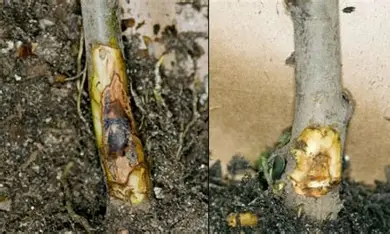
Infected plants show yellowing and wilting of lower leaves, followed by rotting at the collar region near the soil surface. White fungal growth and mustard-like sclerotia appear on the affected portion. In severe cases, the entire plant collapses and dies.
Management
Drenching the soil around the infected plants with Carbendazim @ 2 g/litre of water is effective. Additionally, seed or seedling treatment with Trichoderma viride @ 4 g/kg seed before sowing helps in reducing infection. Proper drainage should be ensured to avoid water stagnation.
Damping Off
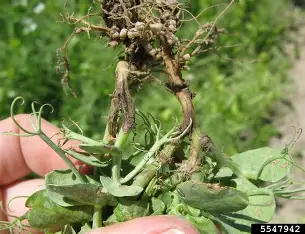
This disease mainly affects seedlings in the nursery, where the basal portion rots, causing the seedlings to topple and die. The disease spreads rapidly under humid conditions and poor soil drainage, leading to heavy mortality.
Management
Damping off can be managed by drenching the nursery soil with Captan or Thiram @ 2 g/litre of water. Raising seedlings on well-drained, raised beds and avoiding excess watering are effective preventive measures.
Sources
Indian Agricultural Research Institute, New Delhi
Department of Agriculture, UP
Ministry of Agriculture & Farmers Welfare