General Information
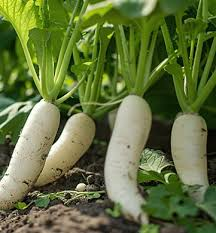
Radish (mooli) is a popular root vegetable grown across India and is ready for harvest within 30 to 60 days, making it a quick-income crop for farmers. Radish is very beneficial as it is rich in fiber, improves digestion, helps control blood pressure, supports heart health, and contains vitamin C, which boosts immunity. It also keeps the body cool and removes toxins. Farmers can use radish in many ways—roots are eaten raw as salad, cooked in vegetables, parathas, pickles, or chutneys, while the leaves can also be consumed or used as fodder for cattle. Because of its short duration, multiple uses, and high demand, radish is a profitable and important crop for farmers.
Climate
Radish is mainly a cool season crop, when the days become long and temperatures rise too high, the crop tends to bolt, which reduces the quality of the roots. For getting the best yield with good flavour, soft texture, and proper root development, the ideal temperature range is 10–20°C. If the temperature goes above 25°C, roots often become hard, pungent, and cracked, which lowers the market value.
| Temperature | Rainfall | Sowing Temperature | Harvesting Temperature |
| 10 – 20 ºC | 700- 1000 mm | 10 – 11 ºC | 20 – 25 ºC |
Soil
Radish grows best in well-drained, sandy loam soils, which allow easy root penetration and proper development. The ideal soil pH is 5.5 to 7.0, making it suitable for slightly acidic to neutral conditions.
Varieties
Pusa Chetki:
Pusa Chetki is an Asiatic variety suitable for cultivation in the hotter months (March to August). It produces long, smooth, white roots with good flavor and remains tender. The crop matures within 40–50 days and gives an average yield of 200–250 quintals per hectare. This variety is highly popular among farmers as it ensures a steady income even in summer.
Pusa Vrishti:
Pusa Vrishti is the first heat-tolerant tropical variety, making it a reliable choice for hot and humid climates where other varieties fail. It develops long, cylindrical, white roots with less pungency and good eating quality. This variety performs well even during stressful growing conditions and provides a yield of 220–260 quintals per hectare.
Pusa Desi:
Pusa Desi is developed from local collection and is known for its tapering roots with a green stem end. It is more pungent in taste, which makes it suitable for local markets where strong-flavoured radish is preferred. Farmers can expect a yield of around 180–220 quintals per hectare from this variety.
Pusa Himani
It is a radish variety developed by crossing Black radish with Japanese White, an European type. It can be grown almost all year round. In hilly areas, it is suitable except from November to January, while in the plains, the best time is mid-December to February. The roots are smooth, white, and of good quality with mild taste. Its average yield is about 200–240 quintals per hectare, making it a profitable and adaptable variety for farmers.
Japanese White
Japanese White is a European type variety, best suited for the late Kharif and Rabi seasons. It is a less-bolting variety, which means it can be grown for longer without premature flowering. However, it produces seeds only in the hills, not in plains. The roots are smooth, white, and mild in taste. Farmers can expect an average yield of 160–200 quintals per hectare from this variety.
Arka Nishant
Arka Nishant is an Asiatic variety known for its mild, crisp roots with mild pungency. It is free from early bolting, pithiness, splitting, and forking, which ensures good market quality. The variety is reliable for cultivation in warmer conditions. Its average yield ranges between 200–240 quintals per hectare, making it profitable for farmers.
Punjab Safed
Punjab Safed is an Asiatic type variety that produces long, thick, smooth, tapering, and pure white roots. The taste is mild to medium pungent, with good flavor, and the roots are free from forking, making them attractive in the market. On average, farmers can obtain 200–250 quintals per hectare yield from this variety.
Kashi Hans
Kashi Hans is an Asiatic type variety with moderate resistance to Alternaria blight, a common fungal disease of radish. It produces uniform roots of good quality and is suitable for cultivation in different seasons. The variety gives a dependable yield of 210–240 quintals per hectare, offering farmers both disease tolerance and good productivity.
White Icicle
White Icicle is a European type variety, well suited for the late Kharif and Rabi seasons. It produces slender, white, tender roots with a mild flavor, making it popular for salad use. However, if the crop is not harvested at the right time, the roots become pithy and lose quality. This variety requires timely harvesting to ensure good market value. On average, it yields about 160–200 quintals per hectare.
Rapid Red White Tipped
Rapid Red White Tipped is a European variety that produces short foliage and small roots, which are red in color with a white tip. It matures quickly and is mainly used as a salad radish. It can also be cultivated in the plains during November–December, making it suitable for the winter season. The average yield is about 150–180 quintals per hectare.
Scarlet Globe
Scarlet Globe is a popular European salad variety producing small, round, bright red roots with crisp white flesh. The roots are mild in taste and highly attractive in appearance, making them suitable for fresh market sale. It is best grown in cool winter months, and its average yield is 150–170 quintals per hectare.
Scarlet Long
Scarlet Long is another European type, producing long, slender, bright red roots with tender flesh and mild flavour. Like other European types, it is mainly grown in the cool season and preferred for salad use. Its average yield is about 160–180 quintals per hectare.
Jaunpuri Giant
Jaunpuri Giant is a famous variety of eastern Uttar Pradesh, especially in Jaunpur, Varanasi, and Azamgarh. Its roots are very large, weighing 5 to 15 kg each, and are used for both eating and cattle fodder. This variety is unique to UP and gives a sense of regional identity. The average yield is about 300–350 quintals per hectare.
Pusa Reshmi
Pusa Reshmi is mainly grown in the Rabi (winter) season across the UP plains. It produces long, smooth, white roots with green tops that are tender and mildly pungent. It matures in 55–60 days and is highly suitable for fresh markets. The average yield is around 350–400 quintals per hectare, making it a profitable winter crop for farmers.
Other Varieties
Pusa Himani, Pusa Mridula, Pusa Jamuni, Pusa Gulabi, Pusa Ketaki, Chinese Pink, CO-1, CO-2, Kalyani White, Hisar Mooli No. 1, Kalyanpur No. 1, Kashi Aardra, UHFR-12-1, Ganesh Synthetic, Indem Sweta, Ankur Naveen, Nadauni, Jaunpuri Giant, Queen, Kvarta.
Field Preparation
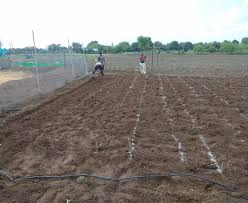
For radish cultivation, the field should be ploughed 3–4 times to make the soil fine and friable. The land must be well-drained and free from clods or stones to allow straight root growth. In lighter soils, closer to 10 tonnes/ha is enough, while in heavier or less fertile soils, farmers should apply up to 15 tonnes/ha for better root growth and soil health.
Sowing
Time of sowing
Radish sowing time depends on the type of variety grown. Temperate or European types mature early in about 25–50 days, and since they require cool weather, they are sown more closely during the late Kharif and Rabi seasons (October to February). On the other hand, Tropical or Asiatic types take a longer time to mature and produce larger roots, so they are sown with wider spacing. These varieties are best suited for the summer, rainy season, and early winter (March to September), making them more adaptable for year-round cultivation in many regions.
Spacing
Radish is sown 45 cm apart and 22 cm high. European types mature quickly and are sown closely (30 × 5–8 cm), while Asiatic types are larger and need wider spacing (45 × 8–10 cm).
Sowing depth
Seeds are placed in shallow furrows 1.5-3.0 cm on ridge tops, mixed with sand or soil, and lightly covered.
Method of sowing
Radish is sown on ridges, where shallow furrows are made on top and seeds mixed with sand or soil are sown by hand. The seeds are then lightly covered with soil and pressed gently. Spacing depends on the variety, as temperate types are sown more closely while tropical types need wider spacing. Radish is also grown as an intercrop with crops like wheat, grapes, onions, cabbage, cauliflower, and fenugreek.
Seed rate
For cultivating radish on one hectare of land, around 10 kg of seed is enough for Asiatic or tropical types, while about 12–14 kg of seed is required for European or temperate types.
Seed treatment
Radish seeds should be treated before sowing to protect against seed-borne diseases and pests. Farmers usually treat seeds with fungicides like Carbendazim or Thiram to prevent fungal infections. In addition, bio-agents like Trichoderma can also be used for eco-friendly protection. This ensures healthy germination and vigorous crop growth.
Manure
Farm Yard Manure
At the time of land preparation, well decomposed farm yard manure or compost @ 250-300 q qa well rotten should be applied in the soil during field reparation and mixed well. It enhances organic matter content and naturally adds nitrogen to the soil, benefiting the succeeding the crop growth.
Fertilizer
Nutrient Requirement (kg per hectare)
| NITROGEN | PHOSPHORUS | POTASH |
| 50 kg | 40-50 kg | 50 kg |
Fertilizer Requirement (kg per hectare)
| UREA | SSP | MOP |
| 109 kg | 250 – 313 kg | 83 kg |
Note:
Apply in two splits – half as basal dose at sowing and the remaining half as top-dressing about 25–30 days after sowing to support root growth.
Nutrient Deficiency
Boron Deficiency
Symptoms:
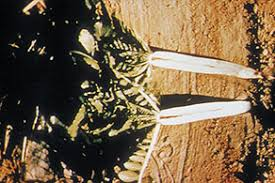
Boron deficiency is a frequent issue in the sandy soils of Uttar Pradesh. In radish, the deficiency leads to the development of hollow centers inside the roots, which later turn brown or black. This disorder is commonly called brown heart or hollow root. Such roots lose their tenderness and quality, making them unsuitable for the fresh market and reducing their value.
Management:
To prevent and correct boron deficiency, farmers should apply Borax at 8–10 kg per hectare to the soil during land preparation. For standing crops, a foliar spray of 0.25% borax solution is recommended, which helps in quick recovery and improves root quality.
Molybdenum Deficiency
Symptoms:
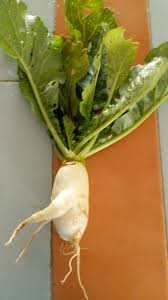
Molybdenum deficiency is mostly found in acidic soils, especially in eastern Uttar Pradesh. The main symptom is “Whiptail” disorder, where leaves become narrow, curled, and deformed, showing only the midrib. Plants remain weak, photosynthesis is reduced, and root development becomes poor, resulting in yield loss.
Management:
Farmers can manage this deficiency by applying Ammonium molybdate or Sodium molybdate at 0.5–1 kg per hectare to the soil. In standing crops, a foliar spray of 0.01% molybdate solution provides faster correction and helps the plants regain normal growth.
Weed control
The first weeding in radish should be carried out about 15–20 days after sowing. For effective weed management, a pre-emergence application of Fluchloralin at 0.5 kg per hectare can also be used to control weed growth in the field.
Intercultural operations
Thinning in radish should be done about 15–20 days after sowing to maintain proper spacing between plants, ensuring 5–10 cm gap in a row for healthy growth. Earthing up is equally important, as developing roots often push above the soil surface; covering them with soil helps produce well-formed, elongated, and good-quality roots. Additionally, thinning reduces overcrowding, improves air circulation, and allows better nutrient uptake, while earthing up prevents greening and cracking of roots.
Irrigation
After sowing, the radish crop should be irrigated once every 6–7 days to maintain optimum soil moisture. Consistent watering is important, as both water stress and waterlogging can affect root development. Adequate irrigation ensures uniform growth, prevents splitting or cracking of roots, and helps achieve better yield and quality.
Plant Protection
Major diseases and their management
| Disease | Symptoms | Peak Stage of Infestation | Management |
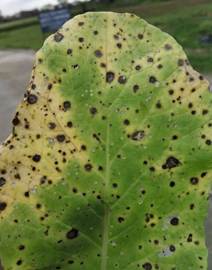
| Alternaria Leaf Spot | Small dark spots on leaves which enlarge with concentric rings; leaves may dry and fall. | Early vegetative stage | Spray Mancozeb 75% WP @ 2.5 g/litre at 10 to15 day intervals. |
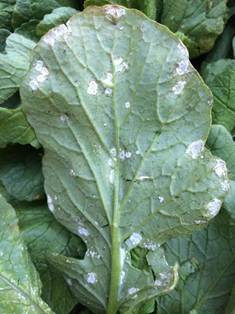
| Powdery Mildew | White powdery growth on leaves and stems; leaves curl and dry. | Mid vegetative stage | Spray Sulphur 80% WP @ 2 g/litre or Mancozeb 75% WP @ 2.5 g/litre. |
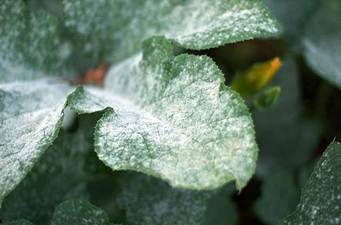
| Downy Mildew | Yellow patches on upper leaf surface; white mold on lower surface. | Early growth to flowering | Spray Metalaxyl 8% + Mancozeb 64% WP @ 2 g/litre. |
| Black Rot | V-shaped yellow lesions from leaf margins; dark veins; blackening of veins. | Early vegetative stage | Use disease-free seeds, crop rotation; spray Copper oxychloride 50% WP @ 3 g/litre. |
| Clubroot | Swollen, deformed roots; stunted plant growth. | Seedling to early vegetative stage | Apply lime to raise soil pH to 7 to 7.2; avoid infested fields. |
| Bacterial Soft Rot | Roots become soft, watery, and foul-smelling; stems may collapse. | At reproductive stage and harvesting | Remove infected plants; maintain proper drainage; avoid waterlogging. |
Alternaria Leaf Spot:
Alternaria leaf spot causes small, dark circular spots on radish leaves that gradually enlarge with concentric rings. The affected leaves may dry, curl, and eventually fall, reducing the plant’s photosynthetic area and overall vigour.
Management:
To control Alternaria leaf spot, spray Mancozeb 75% WP @ 2.5 g per litre of water at 10–15 day intervals.
Powdery Mildew:
Powdery mildew appears as a white, powdery coating on the surface of leaves and stems. Infected leaves curl, dry out, and may drop prematurely, weakening the plant and reducing root development.
Management:
Spray Sulphur 80% WP @ 2 g per litre or Mancozeb 75% WP @ 2.5 g per litre of water to control powdery mildew effectively.
Downy Mildew:
Downy mildew shows as pale yellow or yellowish-green patches on the upper leaf surface, with a grayish-white mold on the lower surface. The leaves may curl, become distorted, and stunt plant growth.
Management:
Spray Metalaxyl 8% + Mancozeb 64% WP @ 2 g per litre of water to manage downy mildew.
Black Rot:
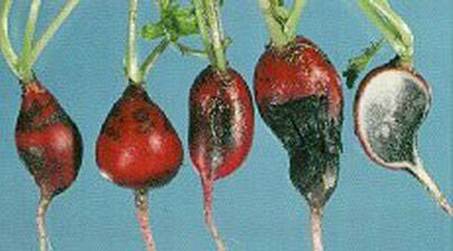
Black rot is identified by V-shaped yellow lesions starting from leaf margins, with veins turning dark and blackened. Infected leaves may wither, reducing photosynthesis and weakening the plant.
Management:
Use disease-free seeds, practice crop rotation, and spray Copper oxychloride 50% WP @ 3 g per litre of water for control.
Clubroot:
Clubroot leads to swollen, deformed roots and stunted plant growth. The roots become knobby or distorted, limiting nutrient and water absorption and lowering yield.
Management:
Apply lime to raise soil pH to 7–7.2 and avoid planting radish in infested fields.
Bacterial Soft Rot:
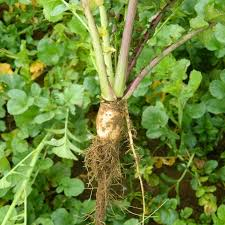
Bacterial soft rot causes roots to become soft, watery, and foul-smelling. Stems may collapse, and the disease spreads quickly under humid or waterlogged conditions, leading to significant losses.
Management:
Remove infected plants promptly, ensure proper drainage, and avoid waterlogging to prevent further spread.
Major pest and insects and their management
| Pest/Insect | Symptoms | Peak Stage of Infestation | Management |
| Aphids | Curling, yellowing, and distortion of leaves; sticky honeydew on leaves | Seedling to vegetative stage | Spray Imidacloprid 17.8 SL @ 0.3 ml/litre or Thiamethoxam 25 WG @ 0.2 g/litre of water |
| Diamondback Moth | Small holes in leaves, skeletonized leaf tissue, larvae visible on undersides | Early vegetative stage | Spray Bacillus thuringiensis (Bt) @ 2 g/litre or Quinalphos 25 EC @ 2 ml/litre |
| Cutworm | Seedlings cut at the soil level; wilting and drying of plants | Seedling stage | Apply Carbofuran 3G @ 20 kg/ha in soil or Chlorantraniliprole 18.5 SC @ 0.3 ml/litre |
| Flea Beetle | Small round holes on leaves, stunted seedlings | Early vegetative stage | Spray Cypermethrin 10 EC @ 1 ml/litre or Quinalphos 25 EC @ 2 ml/litre |
| Cabbage Semilooper | Irregular holes on leaves; webbing may be seen on lower leaves | Vegetative to flowering stage | Spray Spinosad 45 SC @ 0.2 ml/litre or Bt @ 2 g/litre |
Aphids
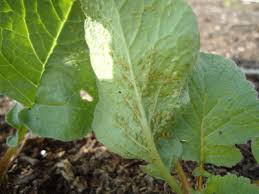
Aphids are small, soft-bodied insects that suck sap from radish leaves, causing curling, yellowing, and distortion of leaves. They also excrete sticky honeydew, which can lead to sooty mold growth and reduced photosynthesis, ultimately affecting root development and yield.
Management
Spray Imidacloprid 17.8 SL @ 0.3 ml per litre of water or Thiamethoxam 25 WG @ 0.2 g per litre of water for effective control.
Diamondback Moth
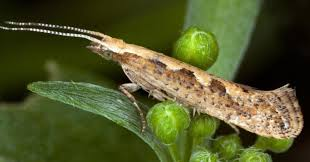
The larvae of diamondback moth feed on radish leaves, creating small holes and skeletonizing the leaf tissue, mainly on the undersides of leaves. Heavy infestations can severely reduce leaf area, weakening the plants and lowering root quality.
Management
Spray Bacillus thuringiensis (Bt) @ 2 g per litre of water or Quinalphos 25 EC @ 2 ml per litre of water to control the larvae.
Cutworm
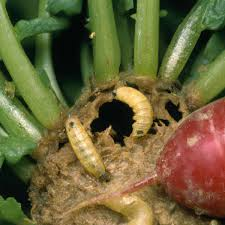
Cutworms attack radish seedlings by cutting them at the soil level, causing wilting and drying of young plants. They hide in soil during the day and feed at night, making early seedlings highly vulnerable.
Management
Apply Carbofuran 3G @ 20 kg per hectare in the soil or Chlorantraniliprole 18.5 SC @ 0.3 ml per litre of water as a foliar spray.
Flea Beetle
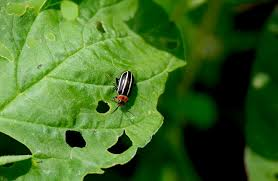
Flea beetles feed on young leaves, producing small, round holes that stunt seedling growth. Severe infestations reduce photosynthesis and weaken plants, resulting in poor root formation.
Management
Spray Cypermethrin 10 EC @ 1 ml per litre of water or Quinalphos 25 EC @ 2 ml per litre of water to manage flea beetles effectively.
Cabbage Semilooper
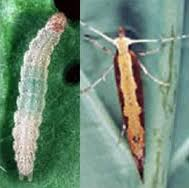
Cabbage semilooper larvae chew irregular holes on leaves, often leaving webbing on the lower surfaces. This reduces leaf area, slows growth, and decreases root size and marketable yield.
Management
Spray Spinosad 45 SC @ 0.2 ml per litre of water or Bacillus thuringiensis (Bt) @ 2 g per litre of water for controlling the larvae.
Physiological Disorders
Akashin
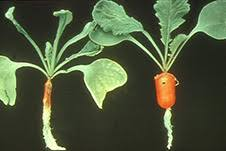
Akashin is a physiological disorder in radish primarily caused by boron deficiency. It can also occur due to high day and night temperatures (around 30°C/20°C) and low soil moisture, resulting in poorly developed, deformed roots that reduce marketable yield.
Management
To correct Akashin, spray boron at 1–2 ppm. Additionally, maintaining proper soil moisture and avoiding extreme temperature stress helps prevent the disorder.
Pithiness
Pithiness is characterized by the death of xylem and collapse of parenchymatous tissue in roots, sometimes leading to hollow roots. It is often a sign of senescence, and its severity varies among varieties. Excessive application of N, P, and K fertilizers, high temperatures before harvesting, and delayed harvesting are common causes, which reduce root quality and marketability.
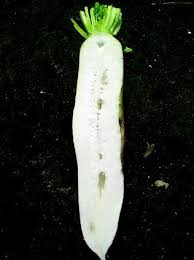
Management
Farmers should select resistant varieties, maintain proper plant spacing, ensure optimum soil moisture, harvest at the right maturity stage, and avoid excess fertilization or injury to roots during intercultural operations.
Forking
Forking occurs when secondary roots enlarge, forming split or forked roots. It is usually caused by excess moisture during root development or heavy, compact soils, which restrict normal root elongation. Forked roots are generally unsuitable for the market.
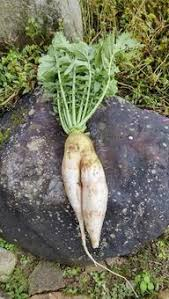
Management
To prevent forking, avoid over-irrigation, cultivate radish in light, well-drained soils, and ensure proper soil preparation to reduce compaction, allowing straight, healthy root growth.
Harvesting
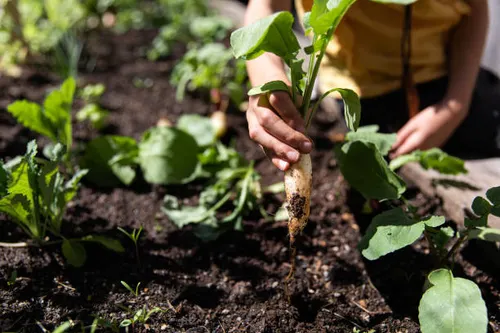
Harvesting of radish depends on the variety. European varieties are ready for harvest 25–30 days after sowing, while Asiatic types are uprooted 40–45 days after sowing. The crop should be well-irrigated before pulling to make uprooting easier.
Post harvesting and storage
After harvesting, roots are trimmed, washed, and sorted for market. Finally, they are packed carefully, often in gunny bags, to maintain freshness during storage and transport. They are then packed carefully, often in gunny bags, and stored in cool, shaded, and ventilated places to maintain freshness and prolong shelf life.
Sources
Indian Agricultural Research Institute, New Delhi
Department of Agriculture, UP
Ministry of Agriculture & Farmers Welfare